Posts on the
Design Decomposition Blog
Incremental SOA and Change
Computerworld had an article last January that discussed American Airlines’ approach to using Web Services and multiple enterprise service buses (ESBs) as part of their service-oriented architecture (SOA). The authors emphasized a change from build vs. buy and from using mainframes. That, however, is not the part I found interesting. (Also, several comments to the [...]
May 22, 2013
Articles on Cloud Computing and Revised Edition of the Savvy Manager’s Guide
After a very long gap, I’m resuming postings. Going forward, this blog will be a source of information about software design with an emphasis on service-oriented architecture (SOA) and Cloud Computing. Using my background and experience, my intent is to provide useful information and thought on software design rather than just add to the general [...]
May 15, 2013
Iridium Satellite Collision in Space
You might have seen the recent news reports about the collision between U.S. and Russian communication satellites. The U.S. satellite was one of the Iridium satellites. What wasn’t reported and you probably don’t know is that an object database management system (ODBMS) is an important part of the Iridium system. Even though ODBMSs are a [...]
February 13, 2009
(The Acronym) SOA is (Perhaps) Dead (at Some Companies); Long Live Services
I am now also posting on the Cutter Blog. My initial posting is (The Acronym) SOA is (Perhaps) Dead (at Some Companies); Long Live Services. It is a response to Anne Thomas Manes’ SOA is Dead; Long Live Services on her blog at the Burton Group.
January 9, 2009
Atomicity
The typical definition of an atomic task or process is one that cannot be decomposed further. This is vague and subject to interpretation. The Decomposition Matrix on this site uses a specific definition: A task (for business process diagrams) or a process (for data flow diagrams) is atomic if every input relates to every output [...]
December 3, 2008

Object Database Management Systems (ODBMSs) are designed to work well with object programming languages such as C#, C++, and Java. These articles provide a background on ODBMSs and their use.

If you are interested in a listing of object database products, click here.

Finally, in addition to the articles listed below, be sure to check out the database concepts and standards articles. Many of these database concepts apply to all forms of database management systems: relational (RDBMS), object (ODBMS), XML (XDBMS), and others as well as object-relational mapping and XML-mapping products. 

Related Fact Book and Implementation Stories

Douglas K Barry

Read More Free Articles on This Site

There are over 450 pages of articles on this site with over 50 pages on object-oriented database management systems.

Search this site for more articles

Custom Search

Browse this site for more articles

Click on the topics below to browse the articles on this site. You can see more detail by clicking on the arrows. This highlights the location of the current article: Object Database Articles.

Loading...

The Savvy Manager's Guide

Douglas K Barry has prepared the material on this site. He is also the author of a book that explains Web Services, service-oriented architecture, and Cloud Computing in an easy-to-understand, non-technical manner.
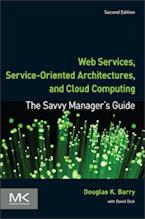
Web Services, Service-Oriented Architectures, and Cloud Computing: The Savvy Manager's Guide

Web Services, Service-Oriented Architectures, and Cloud Computing: The Savvy Manager's Guide (Second Edition)

by with David Dick

One of the toughest jobs for managers today is keeping up with the rapid changes in technology. An important change in technology is that the future of software will involve service-oriented architectures with some form of cloud computing. More and more services are available on the Internet. Nearly every day, we can discover new opportunities to connect these services together to create service-oriented architectures (SOAs). These SOAs will require less custom software in organizations, but will likely demand more creativity in the selection and assembly of services. This is a natural evolution of software technology and will be explained in this book.

This is a non-technical book on a technical subject. It assumes no prior knowledge of the technology. It is written with a high-level view at the beginning of the book. As the book progresses, technical details are introduced and explained. You can stop reading at any point once you have enough understanding for your use.

"...What drives adoption? What corporate forces will resist adoption?...The Savvy Manager's Guide explains how all of this great new stuff is going to leverage existing infrastructure in real corporate settings, and benefit from modern software development processes like Model Driven Architecture."

, Ph.D.
Chairman and CEO, Object Management Group, Inc.